
The history of abstract art is the story of artists moving away from realistic subjects to express emotion, energy, and inner experience through colour, form, and movement.
Abstract art began in the early 20th century when artists rejected realism and used colour, shape, and gesture to express emotions beyond the visible world.
This article explores the history of abstract art, but more importantly, it explores why abstraction became necessary.
For centuries, art was expected to reflect the visible world. Painters were praised for accuracy, detail, and realism. But as the modern world grew louder and more complex, many artists felt that realism no longer captured their inner reality.
Abstract art emerged from that tension.
Instead of showing what something looks like, abstraction focuses on how something feels — emotion, movement, memory, and atmosphere. That’s why people today are often drawn to learning how to interpret abstract art without needing art history knowledge or technical language.
Abstract art began in the early 1900s, during a period of intense change. Industrialisation, psychology, philosophy, and new scientific discoveries were reshaping how people understood reality itself.
Artists began asking bold questions:
These questions marked the true beginning of abstract art as a movement, not just an experiment. From that moment on, art no longer needed to explain itself — it could simply be experienced.
To understand abstraction, it helps to look at the movements that shaped it. Each one challenged tradition in a different way, gradually expanding what art could be.
Cubism, pioneered by Pablo Picasso and Georges Braque, broke objects into geometric fragments and presented multiple viewpoints at once.
Rather than painting what something looks like from a single angle, Cubism explored how we experience objects over time. This distinction continues to shape how people understand abstract and contemporary art today
Kazimir Malevich took abstraction further by removing recognisable imagery altogether.
His work reduced art to simple shapes and limited colour, focusing entirely on sensation and emotion. Suprematism proved that art didn’t need objects to communicate meaning — a radical idea that changed art history forever.
After World War II, Abstract Expressionism emerged as artists searched for ways to process trauma, uncertainty, and identity.
Painters like Jackson Pollock turned painting into a physical act, using movement, rhythm, and gesture as part of the work itself. This emotional immediacy explains why abstract art often feels deeply personal, a connection I explore across my writing on abstract art, emotion, and mindfulness.
As abstraction evolved, some artists moved away from dramatic gestures toward stillness and colour.
Artists such as Mark Rothko created large fields of colour meant to be experienced emotionally rather than intellectually.
Standing in front of these works isn’t about identifying shapes — it’s about noticing how colour affects your mood and body, something that also plays a powerful role in interior spaces.
When people think of famous abstract paintings, they often imagine works that challenged viewers and critics alike.
Some of the most influential famous abstract artists include:
These artists showed that abstraction could be both deeply personal and universally resonant.
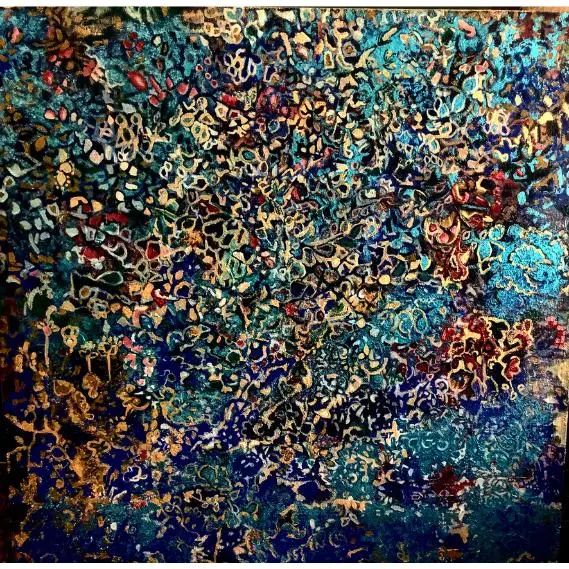
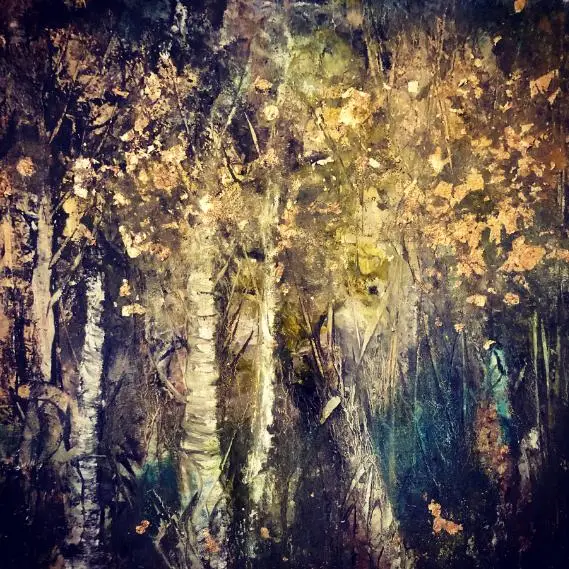
My work sits naturally within the long history of abstract art, but it’s guided by intuition rather than theory. Rather than starting with a fixed concept, I allow emotion, movement, and observation to lead the process.
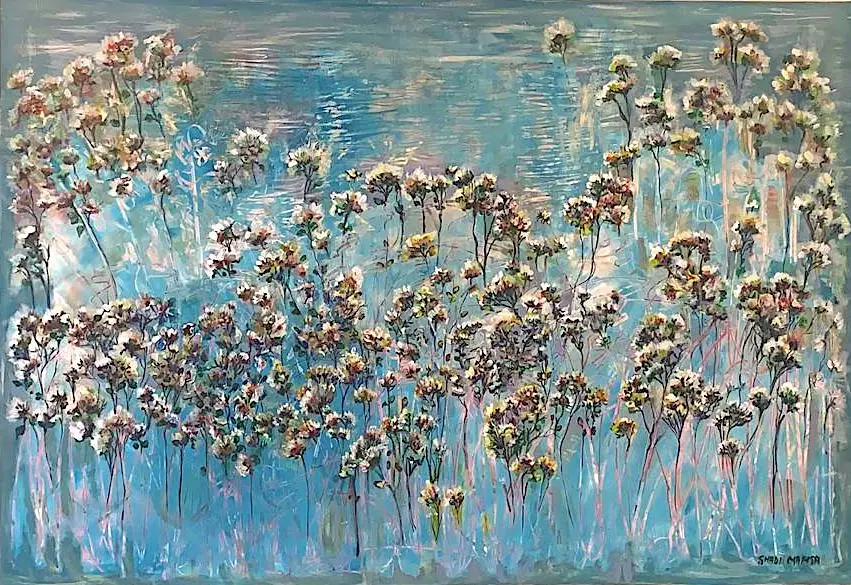
I’m deeply inspired by the way nature moves — through wind, water, growth, and stillness — and I translate that sense of organic motion into layered textures and evolving forms on the canvas.
Instead of following strict rules, I work with emotional pacing, allowing colour shifts and mark-making to reflect inner states rather than external subjects.
I’m drawn to the space where unpredictability meets restraint, where expressive energy is held just enough to feel grounded rather than overwhelming.
People often ask about the difference between abstract art and contemporary art.
Abstract art describes how something is expressed through non-representational forms. Contemporary art describes when the work is made — art created in the present time.
This means abstract art can be contemporary, but not all contemporary art is abstract. Understanding this difference helps collectors feel more confident when choosing art that aligns with their taste and space.
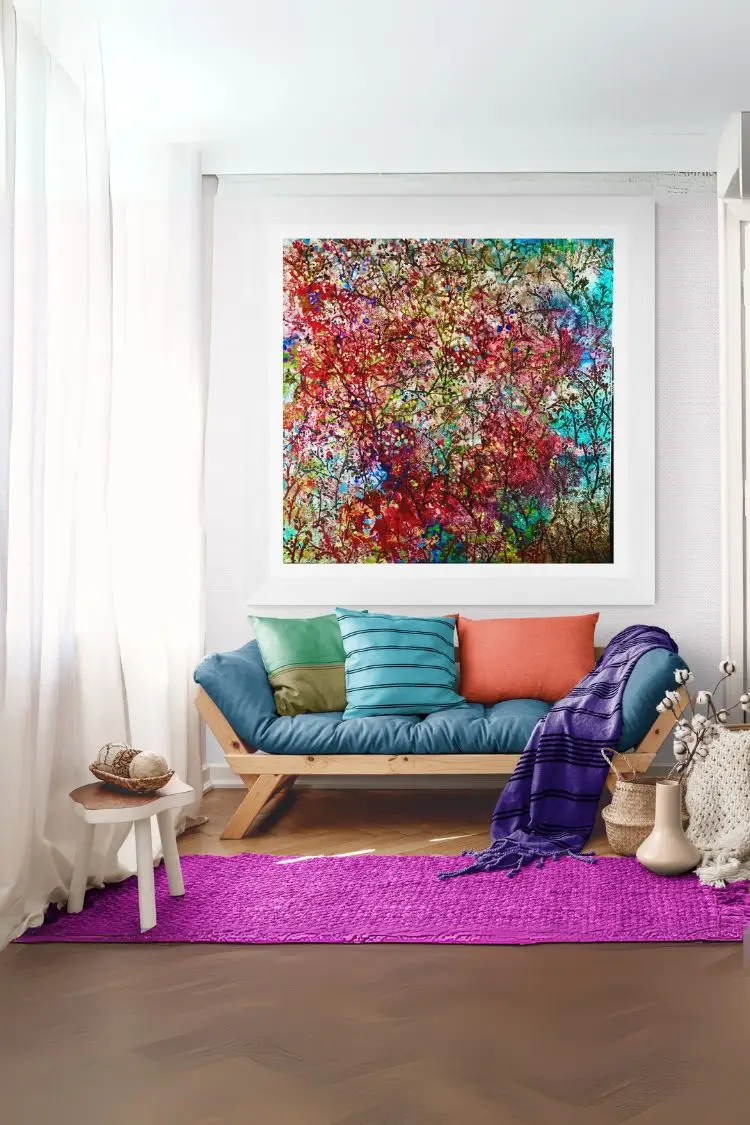
Abstract art continues to thrive because it adapts beautifully to modern living, offering flexibility, emotional depth, and visual balance without overwhelming a space.
Because abstract work doesn’t depict a literal scene, it allows a room to feel expressive without dictating a fixed narrative, making it easier to live with over time.
As furniture, colour palettes, or layouts shift, abstract art continues to feel relevant rather than tied to a specific style or moment.
The more you live with an abstract piece, the more meaning it can reveal, creating an ongoing relationship rather than a one-time visual statement.
This is why abstract works function so well as focal points in contemporary interiors, a concept explored further in my guide to statement wall art focal points.
If you’d like to explore original pieces that work naturally within modern spaces, you can browse my abstract art collection.
If you’re drawn to abstract art, trust that instinct.
You don’t need to analyse it or explain why you like it. Let colour, texture, and movement guide you. Over time, new details often emerge — and that evolving relationship is part of what makes abstract art so meaningful.
If learning about the history of abstract art has sparked curiosity, the best next step is to spend time with real artwork — not to analyse it, but to experience it.
You’re welcome to explore my collections, or reach out if you’d like guidance choosing a piece that feels right for your space. Whether you’re browsing quietly or asking questions, you’re always welcome.
Abstract art is art that doesn’t try to show people or objects realistically. It uses colour, shape, and movement to express emotion or ideas instead.
There’s no single correct way. Focus on how it makes you feel, how colours interact, and where your eye naturally moves.
Abstract art describes a style, while contemporary art describes a time period. Abstract art can be contemporary, but contemporary art isn’t always abstract.
Abstract art creates mood without telling a fixed story, making it flexible, calming, and easy to live with in modern spaces.