The symbolism of flowers in art reflects how artists across cultures have used floral imagery to express emotion, identity, spirituality, and the human relationship with nature.
Flowers in art have long symbolised emotions, beliefs, and life cycles, allowing artists to communicate meaning through colour, form, and cultural association.
The symbolism of flowers in art goes far beyond decoration.
Across history, artists have returned to flowers again and again because they carry meaning almost instinctively. Flowers bloom, fade, and return. They reflect life, loss, renewal, love, resilience, and impermanence — often all at once.
Unlike figures or landscapes, flowers allow emotion to be expressed quietly. A single bloom can suggest tenderness, grief, hope, or spiritual devotion without needing explanation. This emotional openness is why floral imagery continues to feel timeless, even as artistic styles change.
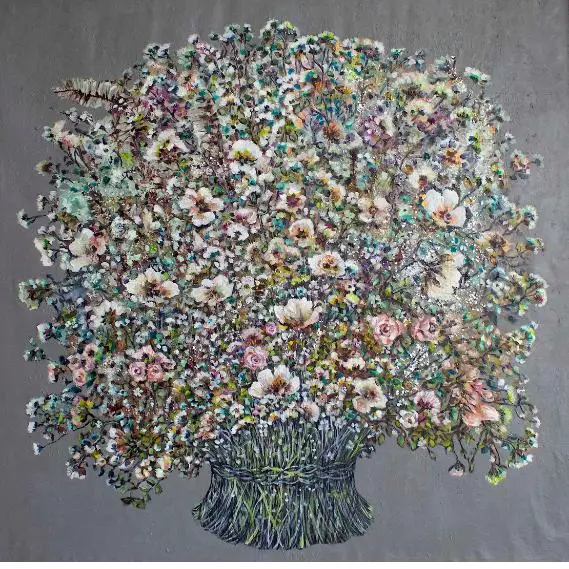
While flowers appear universally in art, their symbolism shifts depending on cultural context, belief systems, and artistic intention.
In many traditions, flowers represent the fragile balance between beauty and transience. Their brief lifespan makes them a natural metaphor for human experience, reminding us that moments — like blooms — are fleeting.
In Western art, lilies were associated with purity and devotion, while roses symbolised love, sacrifice, or divine presence. These meanings allowed artists to communicate complex ideas visually, even to viewers who could not read.
In Persian and Islamic art, flowers frequently symbolised paradise, eternity, and spiritual harmony, forming the foundation for rich floral motifs in Persian art that continue to influence contemporary artists today.
As art movements evolved, flowers remained a constant — but their role shifted.
During the Renaissance and Dutch Golden Age, floral still lifes were carefully composed to reflect themes of wealth, morality, and mortality, often embedding meaning beneath their surface beauty.
Artists such as Georgia O’Keeffe moved away from strict realism, transforming flowers into powerful symbols of identity, scale, and emotional intensity.
Today, flowers are less about symbolism that must be decoded and more about emotional resonance, intuition, and connection — a shift that aligns closely with abstract and expressive practices.
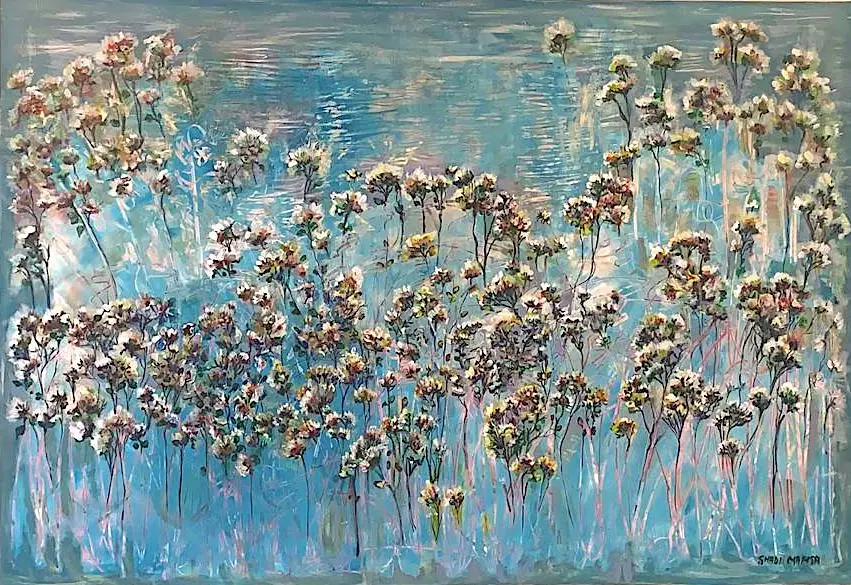
Flowers appear in my work not as decorative elements, but as emotional anchors.
I’m drawn to floral forms because they sit at the intersection of structure and softness — strength and vulnerability. Within abstraction, flowers allow emotion to surface naturally, without needing explanation or narrative.
Rather than telling a story, floral abstraction creates space for feeling, allowing viewers to bring their own meaning to the work.
This connection to nature reflects the wider benefits of nature-inspired decor, where organic forms help balance modern interiors and support emotional well-being.
That relationship between abstraction, emotion, and floral imagery connects closely with how I approach expressive work, which I explore further in my article on understanding abstract art, meaning, emotion, and expression.
Floral art isn’t limited to traditional or romantic interiors. In modern homes, it often plays a very different role.
Abstract or expressive floral pieces introduce organic flow that balances minimal architecture and neutral palettes.
Because floral imagery is rooted in emotion rather than trend, it remains relevant even as furniture, colours, or layouts change — a quality that makes it especially effective in long-term spaces.
This idea is explored further in my guide to floral art in interior design.
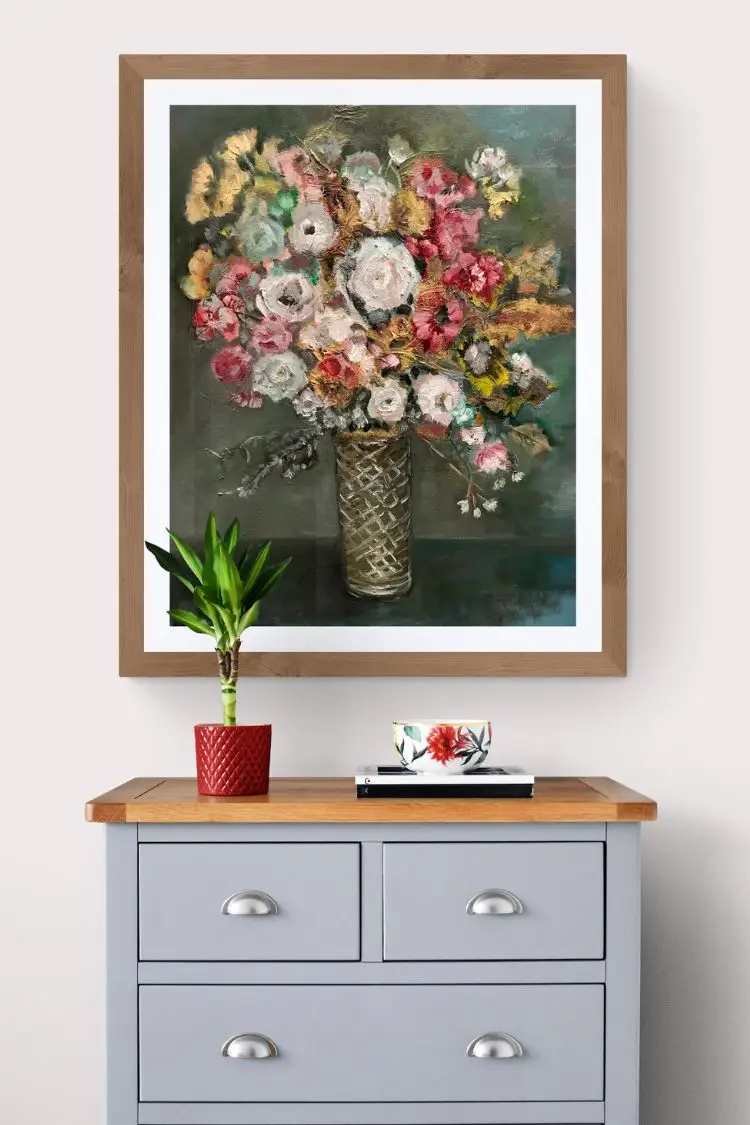
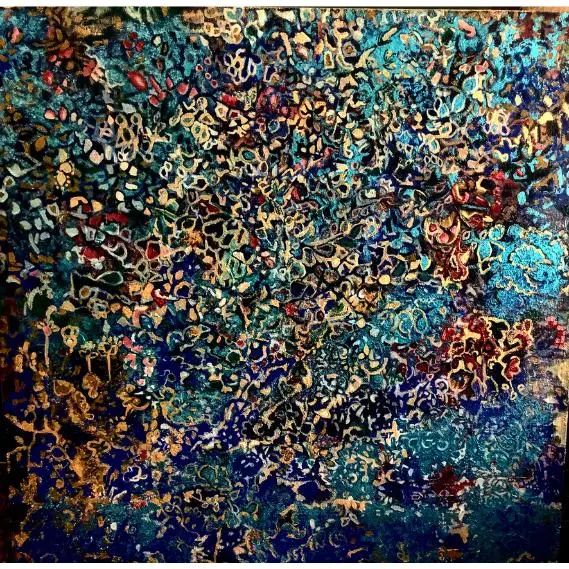
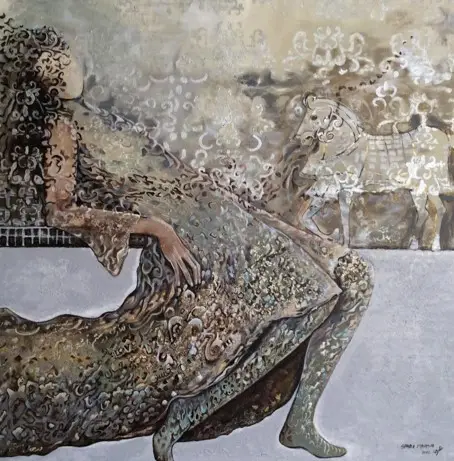
Floral motifs hold a special place in Persian visual culture and continue to shape how I think about rhythm, harmony, and movement.
Rather than copying nature realistically, Persian artists stylised floral forms to reflect harmony and eternity.
Today, symbolic patterns are reinterpreted through texture, movement, and colour rather than ornament, allowing tradition to evolve rather than repeat.
This ongoing influence helps floral abstraction feel both ancient and modern at the same time.
Many people are curious about how to paint abstract flowers, but technique is only part of the process.
Rather than outlining petals, the process often starts with colour, movement, and emotional intention.
Flowers take shape through suggestion rather than definition, allowing abstraction to remain open and expressive.
This balance between expression and control is explored more deeply in my article on floral expressionism and painting flowers.
The symbolism of flowers in art continues to matter because it speaks to universal human experiences.
Flowers remind us of growth and renewal, vulnerability and strength, and our connection to nature. In a fast, digital world, floral imagery offers something grounding and human — a visual pause that feels both familiar and deeply personal.
If you’d like to explore original works inspired by floral symbolism and emotional expression, you can browse my floral collection.
If learning about the symbolism of flowers in art has sparked something for you, the best next step is simply to spend time with the work itself.
You’re welcome to explore the collections or get in touch if you’d like guidance choosing a piece that feels right for your space.
Flowers in art symbolise emotions, life cycles, spirituality, and human connection to nature, often representing love, renewal, and impermanence.
Flowers are visually rich and emotionally expressive, allowing artists to communicate meaning without words or literal narratives.
Different cultures assign unique meanings to flowers based on history, religion, and tradition, such as spiritual harmony in Persian art or purity in Western religious art.
Yes. Floral art adapts well to modern spaces by adding warmth, movement, and emotional balance without feeling dated.
Absolutely. Abstract floral art focuses on emotion, colour, and movement rather than realistic depiction, allowing for personal interpretation.