

Canvas wall art offers a softer, modern, gallery-style look, while framed wall art creates a more polished, structured and classic finish. The best choice depends on your interior style, the artwork’s mood, and how you want the piece to interact with the room.
Canvas art feels modern and airy; framed art feels structured and refined. Choose based on your room’s style, mood and design personality.
When choosing wall art for your home, the artwork itself is only part of the story. The finish—canvas or framed—shapes how the piece feels inside your space. As an artist, I see how the right presentation can elevate a painting, create balance, or soften a room.
If you’re exploring how large artworks transform each room, you can also read my guide on decorating with large wall art.
Canvas art is stretched over wooden bars without an external decorative frame. It creates a gallery-style, modern and minimalist look.
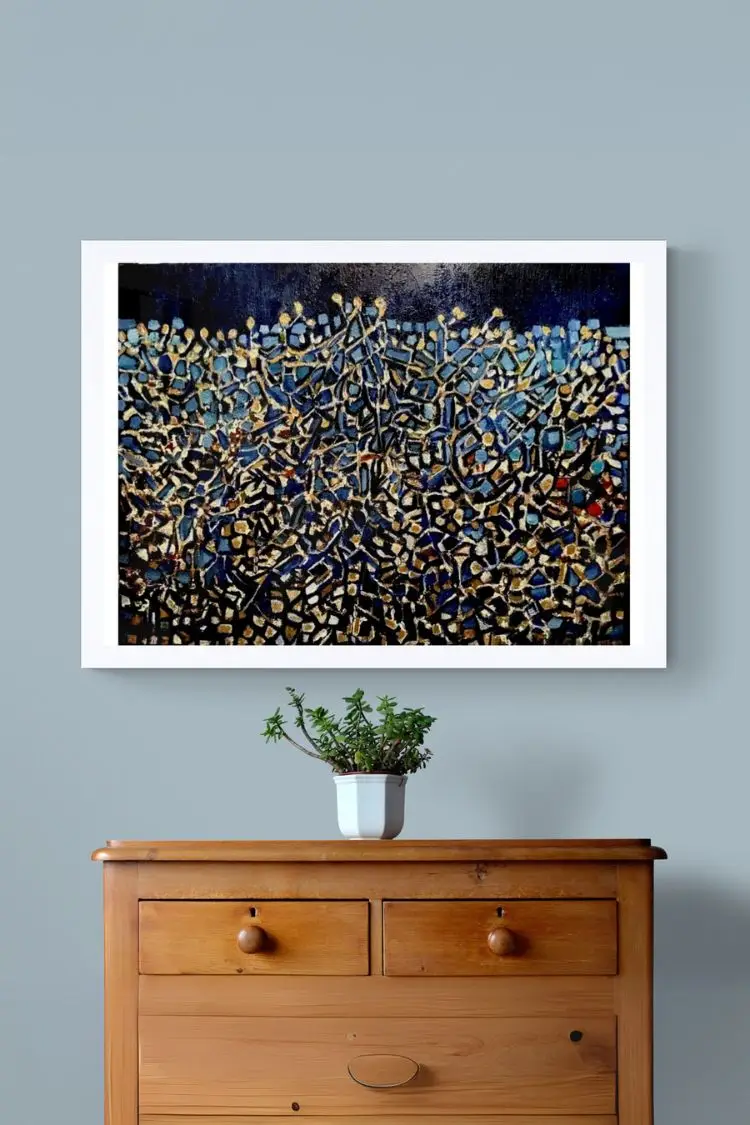
Framed art includes an external border made of wood, metal or composite materials. The frame adds structure, definition and an elegant, finished look.
Both formats influence depth, mood and how the artwork integrates into your home.

Canvas artwork blends naturally into modern homes. It feels light, seamless and contemporary.
Canvas works especially well for:
Because canvas has no rigid border, it feels visually soft and integrated. This makes large expressive pieces feel calmer and more balanced—ideal if you love bold colour but prefer a soothing home environment.
A frame adds visual weight and formality, turning the artwork into a deliberate focal point.
Framed artworks naturally suit:
Frames act as a visual boundary that signals where the eye should rest. This helps the artwork stand out, especially against bold wall colours, textured wallpaper or layered décor.
Here’s how I guide clients when choosing the right finish for their space.
Choose Canvas If…
Choose Framed If…
Canvas suits:
Framing suits:
Art influences how a room feels, not just how it looks.
For colour-driven styling, see my supporting guide about the role of colour in wall art.
Canvas is ideal for:
Framed art is ideal for:
A frame prevents the artwork from visually blending into a busy or saturated background.
Scale affects how each finish impacts the room.
Framing adds:
Canvas adds:
Frames are like punctuation — they create emphasis.
Canvas is like breath — it creates space and stillness.
Canvas Works Best In:
Framed Art Works Best In:
Canvas enhances movement, layering and texture.
Frames add elegance and shape, making floral details stand out.
Canvas keeps the mood natural, airy and relaxed.
Frames add focus, structure and sophistication.
Canvas works seamlessly in contemporary spaces. The soft edges keep the room feeling open, bright and uncluttered — perfect for interiors built around simplicity and flow.
A frame introduces depth, richness and structure. It adds intentionality to the artwork and pairs beautifully with classic furniture, warm textures and heritage-inspired design.
Canvas is ideal for oversized artworks. Without a heavy border, the piece feels more integrated and less overwhelming — a natural choice for expansive living rooms or open-plan layouts.
Frames help medium-sized or small artworks stand out with authority. The structure adds definition, allowing the piece to hold its place even on narrow or busy walls.
Mixing both formats adds style and personality — as long as the choices feel intentional.
Mix Canvas + Framed When:
This mix works especially well with current styling directions in modern London homes. For more ideas, explore my post about wall art trends for contemporary London homes.
Some artworks can be framed later if your interior style evolves.
Frames can:
But not all canvases require framing. Many pieces — especially modern, abstract or nature-inspired works — are designed to stand confidently on their own.
Choosing between canvas and framed wall art isn’t about right or wrong — it’s about mood, personality and the atmosphere you want to create.
Both formats can transform a room beautifully. Trust the artwork — and the finish — that feels most aligned with your home’s identity.
If you’d like personalised guidance choosing the right piece or finish, I’d love to help.
Contact us now to discuss your space, your style, and the artwork that will bring your home to life.
Canvas tends to feel more modern and contemporary, while framed art often leans classic or traditional.
Not always — but a quality frame adds depth, structure and a more formal finish.
Absolutely. Just keep your colour palette cohesive so the wall still feels balanced.
Often yes. Canvas softens bold scale and blends naturally into open spaces.
Not necessarily. Canvas provides a softer, more restful feel that works beautifully in bedrooms.