
Decorating with abstract art matters because it creates atmosphere, adapts to changing interiors, and allows for personal interpretation without limiting a space to a fixed theme.
Abstract art enhances modern interiors by adding emotion, movement, and flexibility without relying on literal imagery.
What you’ll learn:
Modern homes tend to be clean, open, and minimal.
That’s exactly why decorating with abstract art feels so natural — it adds emotion without adding clutter.
Unlike traditional artwork, abstract pieces don’t tell a fixed story. They create a feeling. That makes them easier to live with over time, especially in spaces that evolve.
This is something many people begin to notice after exploring why abstract art works so well in modern homes — the artwork doesn’t compete with the space, it completes it.
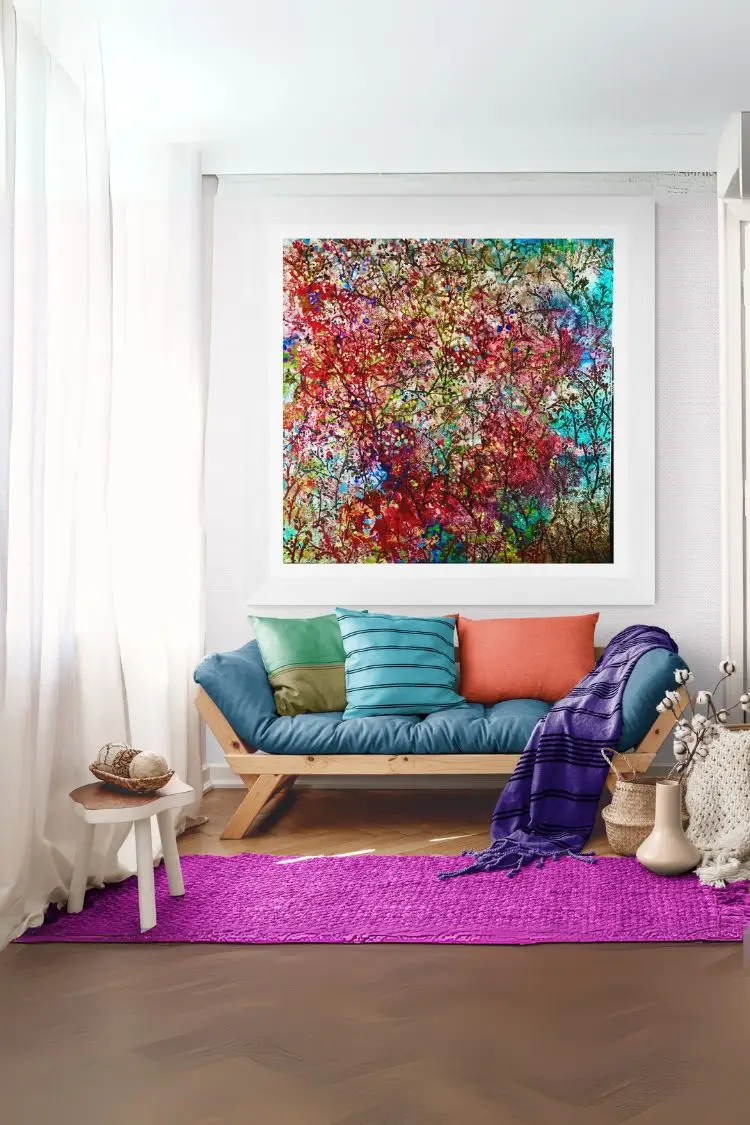
One of the biggest shifts when using abstract art is understanding that it’s not just visual — it’s atmospheric.
A soft, layered piece can create calm, while a bold, high-contrast painting can energise a space.
This emotional connection is what makes abstract art different, and it becomes clearer when you explore how abstract art connects to emotion and expression.
Abstract art adds presence without adding visual noise, which is especially important in modern interiors where simplicity matters.
If you’re unsure where to start, here are some simple, real-world ways to approach abstract art décor ideas.
A single statement artwork above a sofa or bed can anchor the entire room.
This works especially well in neutral spaces, where the painting becomes the main source of visual interest — similar to how statement wall art creates a focal point in a room.
Instead of matching art to your room, reverse the process.
Choose a piece you connect with, then pull subtle tones from it into cushions, textiles, or decor elements. This creates a more natural and cohesive space.
Modern interiors can sometimes feel too structured or rigid.
Abstract paintings introduce movement and fluidity, helping balance clean lines and hard surfaces.
You can see how this works in real settings by browsing an abstract art collection designed for modern interiors.
Instead of one large piece, combine smaller abstract works.
This approach works well in hallways or creative spaces, adding depth and personality without overwhelming the room.
A lot of people hesitate because they feel like they need to “understand” abstract art first.
You don’t.
Learning how to interpret abstract art as a beginner can help — but when it comes to interiors, your response matters more than the explanation.
One of the biggest advantages of abstract art is longevity.
Furniture changes. Colours change. Layouts change.
Abstract art continues to work because it isn’t tied to a specific theme.
A painting can feel different depending on light, time of day, or even your mood.
That evolving experience is what keeps abstract art from feeling static.
When comparing styles, abstract art offers something unique.
Traditional decorative art often:
Abstract art, on the other hand:
This flexibility is why it’s become such a strong part of modern interior design.
At first, abstract art might seem like a stylistic choice.
But in reality, it changes how a space feels.
It introduces:
That’s why decorating with abstract art isn’t just about aesthetics — it’s about creating an environment that feels balanced and personal.

If this has helped you feel more confident about using abstract art in your home, the next step is to spend time with the work itself.
Browse through the abstract art collection to explore pieces that bring movement and emotion into modern interiors. If you’re still unsure where to begin, the guide to interpreting abstract art can help you trust your instinct when choosing a piece.
And if you’d like guidance selecting something for your space, don’t hesitate to contact us now!
Because it creates atmosphere, adapts to changing interiors, and doesn’t rely on fixed meaning.
Use it as a focal point, match colours subtly, and focus on how it makes the space feel rather than what it represents.
Where should abstract art be placed in a home?
Above sofas, beds, or in entryways, where it can act as a visual anchor.
Yes. Even small pieces can create depth and movement without overwhelming the room.
No. Choosing based on emotional response is often more effective than trying to interpret meaning.